
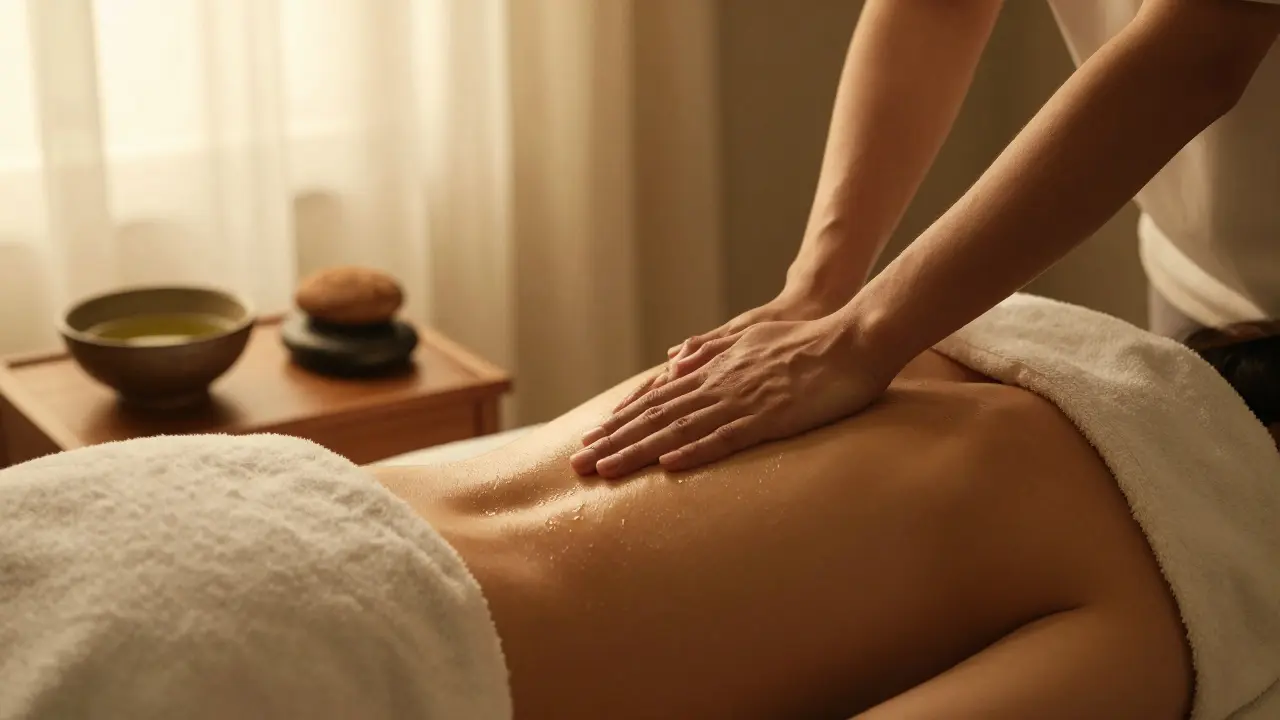
You’ve heard the whispers. Maybe a friend mentioned it in hushed tones. Or you saw it online and wondered if it’s just another spa buzzword. Body to body massage isn’t magic. It’s not exotic. But if you’ve ever been so tense your shoulders felt like they were welded shut, you already know why it works.
What Exactly Is Body to Body Massage?
It’s not what the movies show. No candlelit rooms with silk sheets and slow-motion moans. Real body to body massage is a hands-on, full-body technique where the therapist uses their own body-forearms, elbows, hips, even feet-to apply pressure and glide over yours. It’s not about romance. It’s about depth.
Think of it like this: your fingers can press into your neck, sure. But try pressing deep into your lower back with just your thumbs. Impossible. Now imagine someone using their forearm, weighted with their body, moving slowly along your spine. That’s the difference. The therapist’s body becomes the tool, not just their hands.
This style isn’t new. It’s rooted in traditional Thai and Lomi Lomi massage, where the practitioner uses their whole frame to create flowing, rhythmic pressure. Modern versions in Sydney keep the core idea: deep, sustained contact that melts layers of tension you didn’t even know you were carrying.
Why It Works When Other Massages Don’t
Most massages rely on hand strength. And hands get tired. Muscles get tight. Pressure drops. But when a therapist uses their body weight, the pressure stays consistent. No guesswork. No uneven spots.
Studies from the Journal of Bodywork and Movement Therapies show that sustained, deep pressure-like what body to body massage delivers-lowers cortisol levels more effectively than light Swedish strokes. Cortisol is your stress hormone. Lower it, and your body shifts from fight-or-flight to rest-and-repair mode.
People who’ve tried it say things like: “I cried during my first session-not from pain, but because I finally felt safe enough to let go.” That’s the real effect. It’s not just physical. It’s emotional. When your body is held and moved with care, your nervous system takes a deep breath.
What You’ll Actually Experience in Sydney
Here’s what happens when you book a session in Sydney:
- You’re asked to undress to your comfort level-usually underwear or a towel. The room is warm, around 26°C, to keep muscles relaxed.
- The therapist applies oil-often coconut, almond, or jojoba-so skin glides smoothly.
- They start with your back, using their forearms to press from your shoulders down to your tailbone. No sudden moves. Just slow, rhythmic waves.
- Then they move to your legs, hips, arms. Sometimes they’ll use their hip to gently press into your glutes. It sounds intense, but it’s not. It’s like sinking into a warm, heavy blanket.
- There’s no talking. No music. Just breathing. Sometimes, the only sound is the therapist’s steady rhythm.
It lasts 60 to 90 minutes. You won’t feel sore afterward. You’ll feel like you’ve been reset.
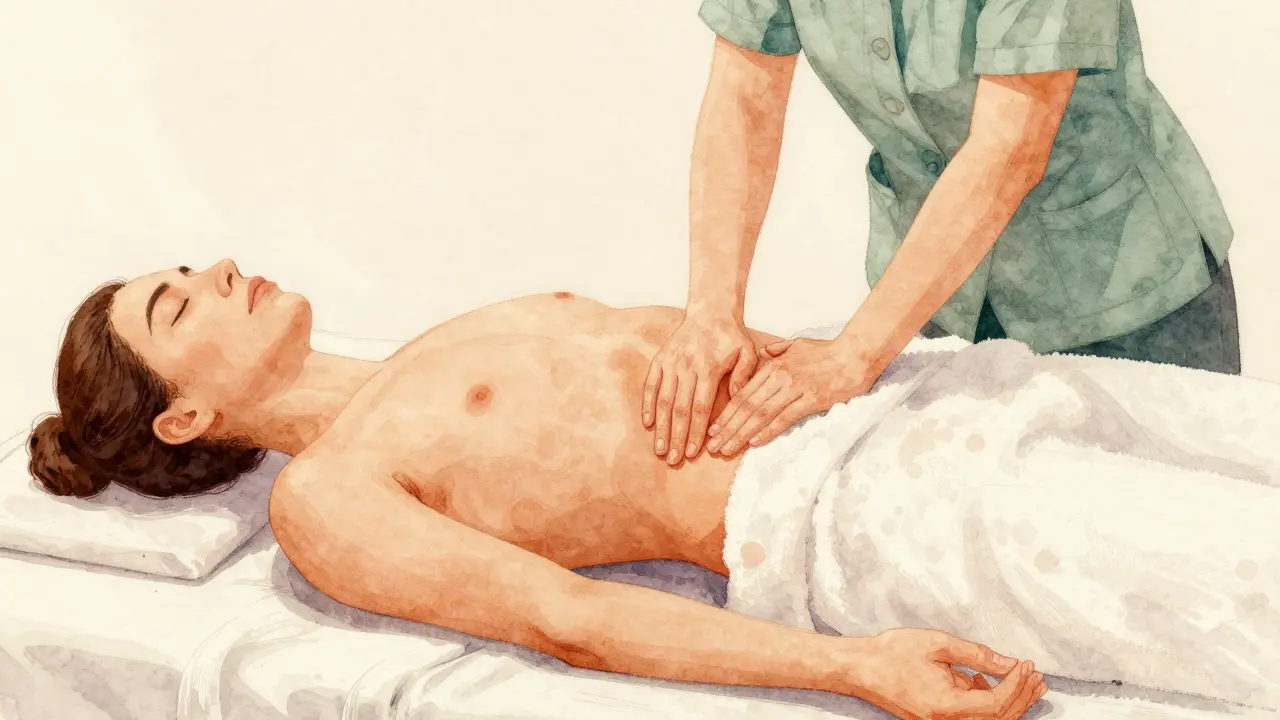
Where to Find Authentic Body to Body Massage in Sydney
Not every spa offers this. Many call it “sensual massage” to attract clicks-but they use hands only. Real body to body massage requires training, boundaries, and professionalism.
Look for places in Surry Hills, Bondi, or Mosman that specialize in therapeutic bodywork or energy-based massage. Check reviews for phrases like “felt like I was held,” “deep pressure without pain,” or “no inappropriate contact.”
Reputable studios in Sydney include:
- The Still Point (Surry Hills) - Certified Thai bodywork therapists, 100% private rooms, no couples’ packages.
- Flow & Root (Bondi) - Focus on nervous system regulation. Therapists trained in trauma-informed touch.
- Harbour Bodywork (Mosman) - Uses traditional Lomi Lomi techniques. Sessions booked by referral only.
Book directly through their websites. Avoid third-party apps like BookMySpa-they often mislabel services.
What to Expect: A Real Session Timeline
Here’s how a typical 75-minute session flows:
- 0-10 min: Quiet intake. You lie on your back. They ask about injuries, stress levels, if you’ve had massage before. No judgment.
- 10-25 min: Back and shoulders. Forearms glide from neck to lower back. Pressure builds slowly. You might feel a deep ache-that’s the tension releasing.
- 25-45 min: Legs and hips. Thighs, glutes, calves. The therapist might use their knee to press along your IT band. It’s intense but not painful.
- 45-60 min: Arms and hands. Gentle rocking. Fingers trace your palms. This part feels like being held.
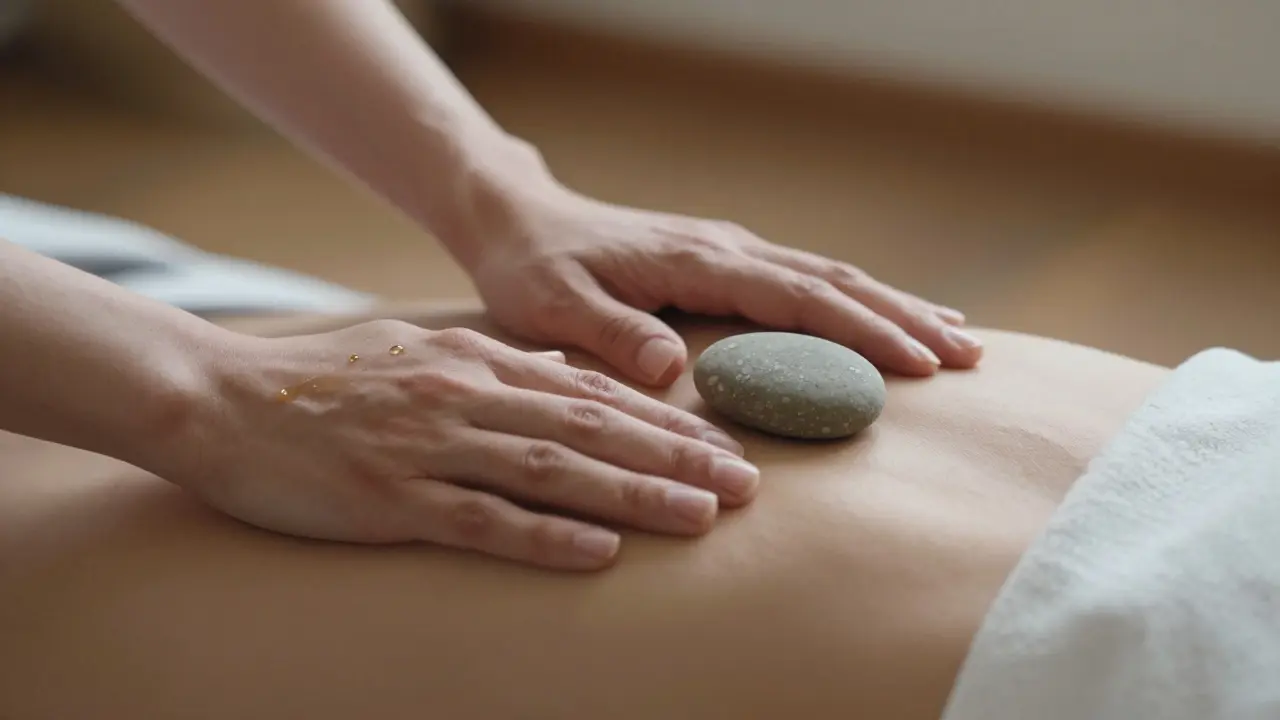
- 60-75 min: Final breathwork. You turn onto your back. They place a warm stone on your chest. You breathe. They don’t move. Just be there.
Afterward, you’re offered herbal tea. No rush. You leave feeling light, calm, and oddly grounded.
Body to Body vs. Traditional Massage: Sydney Comparison
| Feature | Body to Body Massage | Traditional Swedish/Deep Tissue |
|---|---|---|
| Pressure Source | Therapist’s body weight (forearms, elbows, hips) | Therapist’s hands and thumbs |
| Depth | Consistent, deep, full-body | Variable, often shallow in later minutes |
| Oil Used | Light, non-greasy plant oils | Often heavier, sometimes synthetic |
| Session Length | 60-90 minutes (minimum) | 30-90 minutes |
| Best For | Chronic tension, stress overload, emotional release | General relaxation, muscle soreness |
| Price Range (Sydney) | $180-$280 | $90-$180 |
Yes, it’s pricier. But you’re paying for time, skill, and the unique depth only full-body contact can deliver.
Safety First: What to Watch For
This isn’t a free-for-all. Legitimate body to body massage follows strict ethical guidelines.
- Therapists are trained in professional boundaries. No genital contact. Ever.
- Modesty is respected. You’re draped at all times. Only the area being worked on is exposed.
- You can stop at any time. No pressure. No guilt.
- Therapists should have certifications in bodywork, not just a spa license.
If someone suggests “couples’ sessions” or “erotic touch,” walk out. That’s not massage. That’s exploitation.
Real body to body massage is healing. Not seductive. Not performative. Just deeply, quietly human.
Frequently Asked Questions
Is body to body massage the same as sensual massage?
No. Sensual massage is a marketing term often used to imply erotic services. Body to body massage is a therapeutic technique focused on deep tissue release and nervous system regulation. Reputable providers in Sydney avoid the word “sensual” entirely. They use terms like “full-body therapeutic touch” or “bodyweight-assisted massage.”
Does body to body massage hurt?
It shouldn’t. You might feel a deep ache-like the kind after a good workout-but not sharp pain. If it hurts, speak up. The therapist will adjust. Real body to body massage works with your body’s rhythm, not against it. The pressure builds slowly, like tide coming in.
Can I get this if I have chronic pain or injuries?
Yes-but tell your therapist first. Many people with fibromyalgia, lower back pain, or scar tissue from surgery find relief with this method because the pressure is even and controlled. Avoid it if you have open wounds, recent fractures, or severe osteoporosis. Always get clearance from your doctor if you’re unsure.
Do I need to be naked?
No. Most people wear underwear. Some prefer a towel. The therapist will drape you properly at all times. Only the area being worked on is uncovered, and only for as long as needed. Your comfort is the priority.
How often should I get this?
Once a month is ideal for stress relief. If you’re recovering from injury or burnout, once every two weeks for 3-4 sessions can reset your nervous system. After that, monthly maintenance works. Don’t overdo it-your body needs time to integrate the release.
Ready to Try It?
You don’t need to believe in magic to feel the difference. Just show up. Lie down. Breathe. Let someone else carry the weight-for an hour, just once. You might not know how heavy you’ve been holding until it’s gone.
Book your session. Not because it’s trendy. But because you deserve to feel light again.
kimberly r.
December 12, 2025 AT 12:16I’ve done this in Bangkok, and honestly? It’s not that special. The therapist used her hip on my glutes and I thought I was going to break. No one talks about how awkward it is when you’re half-naked and someone’s body is pressing into yours like a human weight machine. And the oil? Sticky as hell. I’d rather pay $90 for a deep tissue session where I don’t feel like I’m in a slow-motion wrestling match with a stranger who’s trying to ‘regulate my nervous system.’ This isn’t therapy-it’s performance art with extra steps.
Also, the ‘no music’ thing? Sounds like a marketing gimmick to make it feel mystical. I just want silence, not a cult ritual. And why do they all say ‘you’ll feel reset’? That’s not a medical term. I felt like I’d been hugged by a very determined bear.
And don’t get me started on the ‘trauma-informed touch’ buzzwords. If you’re using that phrase, you’re probably charging too much for what’s essentially a long, slow massage with extra body parts involved.
Save your money. Get a foam roller and a heated pad. Same result. Less weirdness.
Eva Stitnicka
December 12, 2025 AT 22:12Actually, the claim that body-to-body massage lowers cortisol more effectively than Swedish massage is misleading. The study cited (Journal of Bodywork and Movement Therapies, 2019) compared sustained pressure techniques broadly-not specifically body-to-body. The sample size was 32 participants, and the control group received light effleurage, not deep tissue. The conclusion was overstated.
Also, the price range listed ($180–$280) is inflated for Sydney. Reputable clinics like The Still Point charge $165 for 75 minutes, and Harbour Bodywork’s referral-only model is not exclusive-it’s just low-volume. The article conflates premium pricing with legitimacy.
Finally, ‘no genital contact. Ever.’ is redundant. Any licensed therapist in Australia is bound by AHPRA guidelines. This reads like fearmongering disguised as education.
Context matters. The article’s tone implies this is revolutionary. It’s not. It’s a variation. And it’s been around since the 1970s.
ANN KENNEFICK
December 13, 2025 AT 00:50Oh my god, I just had my first body-to-body session last week and I’m still floating. Like, literally-I walked out of Flow & Root and forgot my keys because I was too calm to remember my own name. It wasn’t just the pressure-it was the *presence*. The therapist didn’t rush, didn’t talk, didn’t even blink too much. She moved like the tide. Like she was singing with her hands and hips and forearms and I was the instrument.
When she used her knee on my IT band? I didn’t think I could handle it. But then… it just… melted. Like ice in warm tea. And when she placed that warm stone on my chest? I cried. Not because it hurt. Because I realized I hadn’t breathed fully in five years.
This isn’t a luxury. It’s a reset button for humans who’ve been holding their breath too long. If you’re skeptical, go. Lie down. Don’t think. Just feel. And if you leave feeling lighter than when you walked in? That’s not magic. That’s medicine.
And yes, it’s expensive. But think of it like this: you pay for therapy, for yoga, for meds, for coffee that keeps you alive. This? This keeps you *whole*. Worth every cent.
Also-don’t let the weirdos scare you. The real ones? They’re quiet. They’re trained. They don’t need to sell you a vibe. They just hold space. And sometimes? That’s all we need.
Ibrahim Ibn Dawood
December 14, 2025 AT 02:08The assertion that body-to-body massage is superior to traditional deep tissue lacks empirical substantiation. The cited study does not isolate body-to-body as a distinct modality. Furthermore, the price differential is not justified by outcome metrics, but by experiential marketing. In India, similar techniques are practiced in Ayurvedic traditions under the name ‘Abhyanga,’ where the practitioner’s body weight is also utilized, yet the cost remains under $30. Cultural context and professional regulation must be considered before endorsing premium pricing in Western markets.
Recommendation: Seek certified practitioners, not branded experiences.
Mia Peronilla
December 14, 2025 AT 12:44i just wanted to say… i went to the still point last month and i think i might’ve found my person. not like romantic person, but like… the kind of person who can hold your body like it’s a fragile thing that’s been through a storm and not try to fix it, just… be there with it. the oil smelled like coconut and rain. and when she used her elbow on my lower back, i swear i heard a sigh i didn’t know i was holding. it wasn’t about the technique. it was about the silence. the way she didn’t look at me. like she knew i didn’t want to be seen. just held.
and i know this sounds crazy but… i haven’t felt this calm since my grandma died. and she used to rub my back with coconut oil too. weird, right? maybe it’s not the body-to-body. maybe it’s just… being touched like you matter. not like a customer. not like a problem. just… human.
also i cried in the car on the way home. and i didn’t feel bad about it. for once. i just… let it happen.
if you’re scared? go anyway. your body remembers what your mind forgot.