
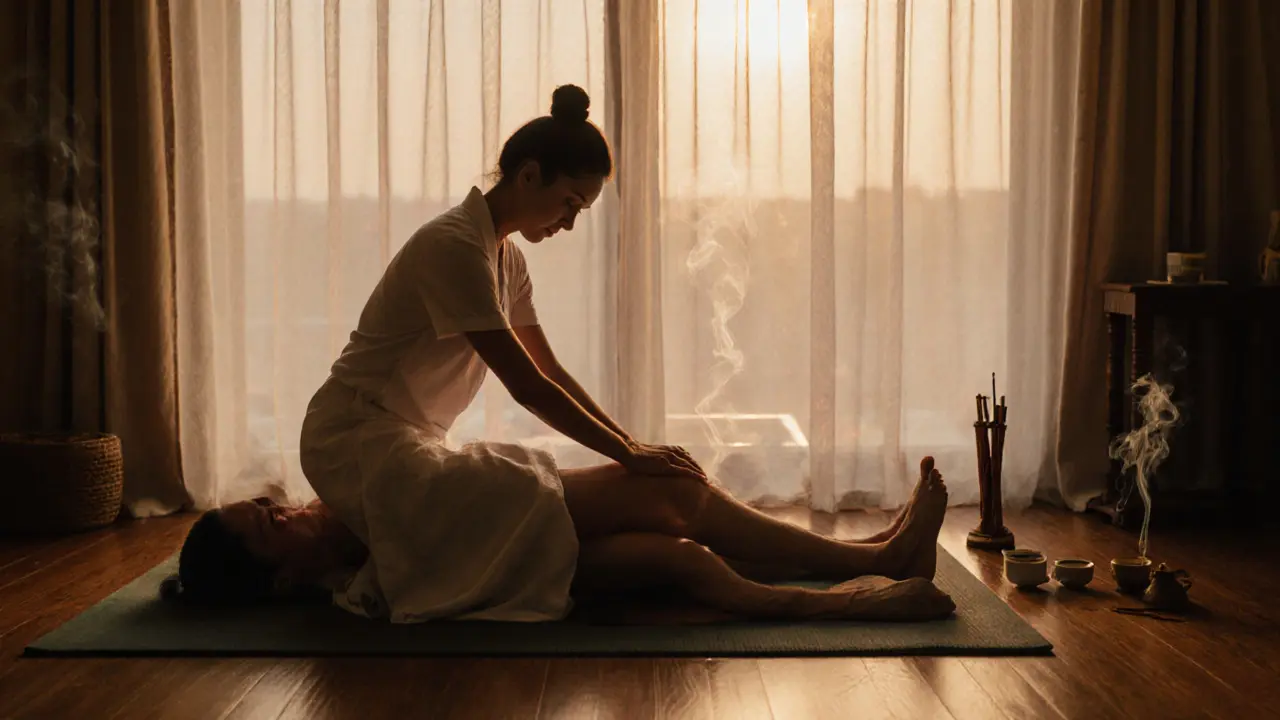
You’ve had a long week. Meetings ran late, the desert heat clung to your skin, and your shoulders haven’t felt right since that flight from Bangkok. You’re not looking for a quick rubdown-you want to feel renewed. That’s where authentic Thai massage in Dubai comes in. Not the watered-down version you find in some hotel spas, but the real thing: pressure points, stretches, energy lines, and the kind of deep release that leaves you breathing differently.
Key Takeaways
- Thai massage in Dubai combines acupressure, yoga-like stretches, and energy line work-no oils, no undressing.
- Authentic Thai massage is practiced in neighborhoods like Jumeirah, Al Quoz, and Downtown Dubai, often by therapists trained in Thailand.
- A typical session lasts 60-120 minutes and costs between AED 250 and AED 650, depending on location and therapist experience.
- It’s not just relaxation-it’s pain relief for back, neck, and shoulder tension common in Dubai’s high-stress lifestyles.
- Always ask if the therapist is trained in Thailand. Many places use the name but lack the traditional technique.
What Is Thai Massage? (And Why It’s Different)
Thai massage isn’t just another massage. It’s an ancient healing system from Thailand, over 2,500 years old, rooted in Ayurveda and Buddhist spiritual practices. Unlike Swedish or deep tissue massage, you stay fully clothed in loose cotton pants and a top. No oils. No table. You lie on a mat on the floor, and the therapist uses their hands, thumbs, elbows, knees, and even feet to apply pressure along energy lines called sen lines.Think of it as passive yoga. The therapist moves you into stretches you couldn’t do on your own-deep hip openers, spinal twists, arm pulls-all while pressing firm, rhythmic points. It’s not gentle. It’s not meant to be. You’ll feel tension release, sometimes painfully, sometimes blissfully. Afterward, you don’t just feel relaxed-you feel restructured.
People in Dubai come to Thai massage for one reason: chronic stiffness. Whether it’s from sitting at a desk all day, carrying heavy luggage through DXB, or just the physical toll of living in a city that never sleeps, your body holds tension in places you didn’t know it could. Thai massage targets those spots directly.
Why Thai Massage Works for Dubai Residents
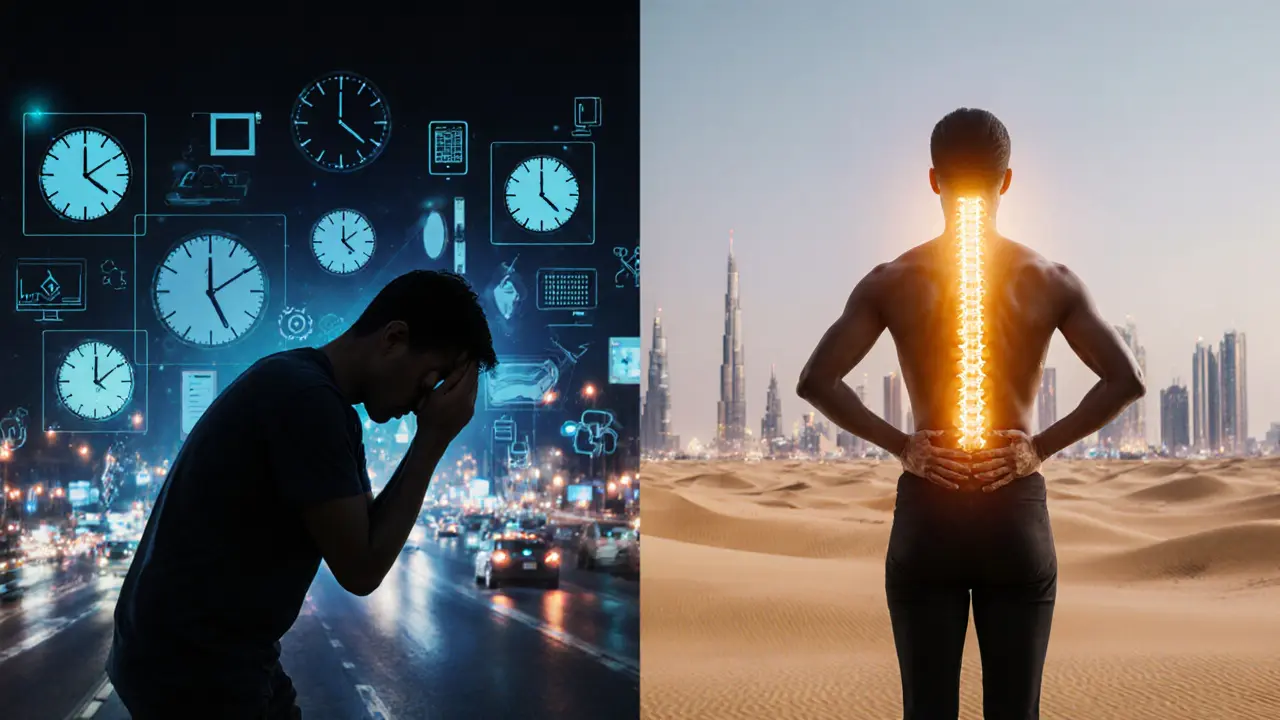
Let’s be real: Dubai isn’t known for slow living. The pace is fast, the air is dry, and stress is a daily companion. Thai massage cuts through that.
Studies from the Journal of Bodywork and Movement Therapies show Thai massage reduces cortisol levels by up to 25% after just one session. That’s not a fluke. It’s science. Your body stops being in fight-or-flight mode. Your breathing slows. Your shoulders drop. Your jaw unclenches.
And it’s not just mental. People with lower back pain from long commutes or standing at work report 40-60% improvement after 4-6 weekly sessions. I’ve seen it myself-clients who came in limping, walking like they were carrying bricks, left walking like they’d shed a weight they didn’t even know they were holding.
It also helps with headaches. The pressure applied to the neck, scalp, and shoulders releases tension that builds up from staring at screens all day. If you’ve ever had a tension headache that didn’t go away with ibuprofen, Thai massage might be your real fix.
Where to Find Authentic Thai Massage in Dubai
Not every place that says “Thai massage” delivers the real thing. Some use the name as a marketing buzzword. Here’s where to go if you want the real deal:
- Jumeirah: Look for Thai House Spa and Wat Pho Thai Massage. Both have therapists trained in Chiang Mai or Bangkok. Wat Pho even has a Thai monk on staff who leads energy flow rituals before sessions.
- Al Quoz: Thai Wellness Center is tucked away in a quiet warehouse district. No flashy signs. Just a quiet door. Their lead therapist spent 8 years training at the Wat Pho temple school.
- Downtown Dubai: Chiang Mai Thai Massage offers 90-minute sessions with full-body stretching and herbal compresses. Popular with professionals who need lunchtime relief.
- Deira: Siam Thai Massage is affordable and busy-go early. They use traditional wooden massage sticks for deep point work, something you won’t find in most luxury spas.
Pro tip: Check reviews for mentions of “no oils,” “on floor,” “full-body stretching,” or “therapist uses feet.” Those are signs of authenticity.
What Happens During a Session?
Here’s what you can expect step by step:
- You arrive, remove your shoes, and sit quietly for a minute. The therapist might offer herbal tea-usually lemongrass or ginger.
- You’re guided to lie on a firm mat on the floor. You wear loose clothes. No underwear changes needed.
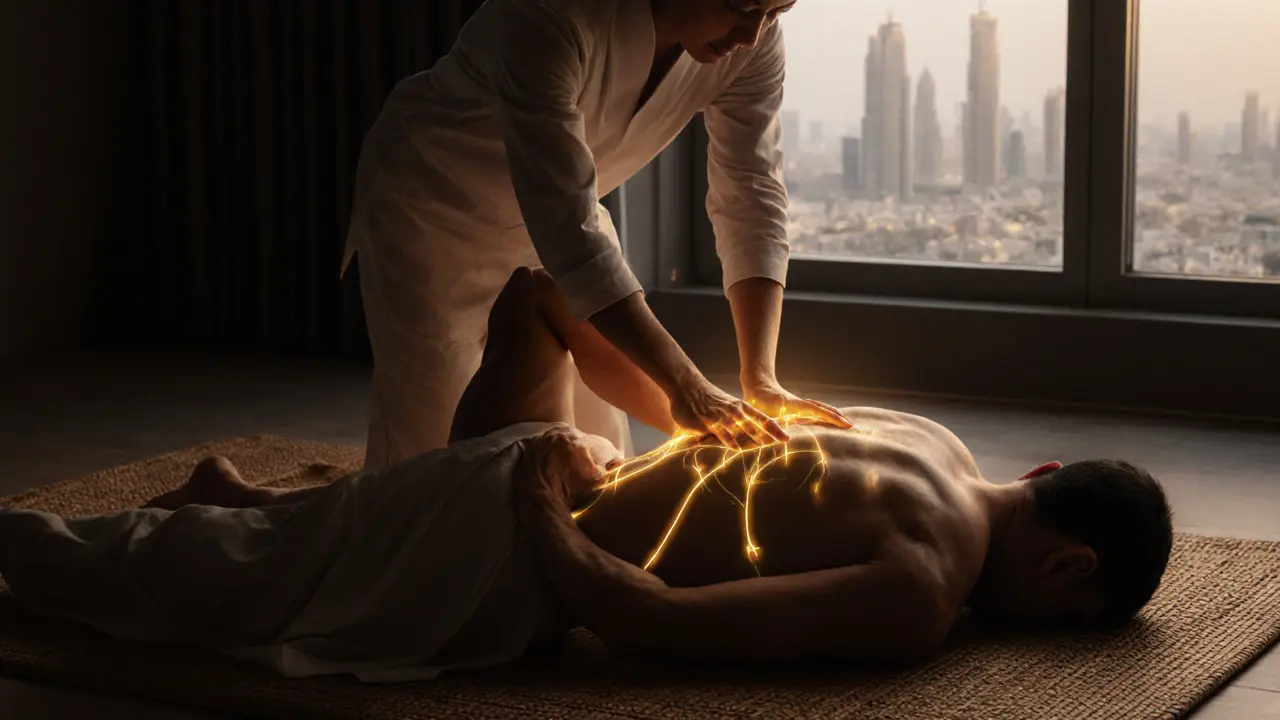
- The therapist begins at your feet, pressing along the sen lines. You’ll feel heat build, then release.
- They move up your legs, hips, and back, using their body weight to apply pressure. Don’t be surprised if they step on your back lightly-it’s part of the technique.
- Next comes the stretches: arms pulled overhead, knees drawn to chest, spine rotated gently. You’ll feel tightness give way.
- The session ends with a light head and face massage, then a moment of silence. You’re told to breathe slowly. Don’t rush up.
Most sessions last 60 minutes. For first-timers, 90 minutes is better. You’ll feel more than just relaxed-you’ll feel like your body remembered how to move properly.
Pricing and How to Book
Prices vary based on location, therapist experience, and session length:
- 60-minute session: AED 250-350
- 90-minute session: AED 380-550
- 120-minute session with herbal compress: AED 550-650
- Package deals: Many places offer 5-session packs for 15-20% off. Good if you’re serious about relief.
Booking is easy. Most places accept walk-ins, but if you want a specific therapist-especially one trained in Thailand-book ahead. Use Google Maps to check opening hours. Some places close during lunch (1-3 PM). Don’t show up at 2 PM expecting to be seen.
Pro tip: Ask if they offer “traditional Thai massage” or just “Thai-style.” The difference matters.
Safety Tips for First-Timers
Thai massage is safe for most people, but there are a few things to watch for:
- Don’t go if you have a recent injury, herniated disc, or severe osteoporosis. The stretches can be too intense.
- Speak up. If something hurts too much, say so. The goal is deep release, not pain.
- Hydrate after. You’ll sweat and your body will flush out toxins. Drink water.
- Avoid heavy meals before. Eat something light 2 hours before your session.
- Wear loose, breathable clothes. No jeans. No tight leggings.
- Don’t expect to fall asleep. You’ll be aware of your body moving. That’s part of the healing.
Women who are pregnant can get Thai massage-but only after the first trimester, and only with a therapist trained in prenatal Thai techniques. Ask before booking.
Thai Massage vs. Swedish Massage in Dubai
| Feature | Thai Massage | Swedish Massage |
|---|---|---|
| Location | Mat on floor | Massage table |
| Clothing | Full clothes (loose cotton) | Undressed under towel |
| Technique | Pressure points, stretches, energy lines | Long strokes, kneading, light pressure |
| Oils Used | None | Yes (almond, coconut, etc.) |
| Best For | Chronic stiffness, posture, energy flow | Relaxation, surface tension, light stress |
| Duration | 60-120 minutes | 60-90 minutes |
| After Effects | Feeling restructured, energized | Feeling sleepy, deeply relaxed |
| Typical Cost (60 min) | AED 250-350 | AED 200-300 |
If you’re looking to fix how your body feels day-to-day-your posture, your mobility, your energy-Thai massage wins. If you just want to unwind after a long day? Swedish works fine. But if you want to feel like you’ve been reset? Thai is the answer.
Frequently Asked Questions
Is Thai massage painful?
It can be, but it shouldn’t be unbearable. The pressure is firm and deep, especially around tight areas like your hips or shoulders. You might feel a sharp sensation for a second, but it should turn into relief. If it’s consistently painful, tell your therapist. They’ll adjust. The goal is release, not punishment.
Do I need to be flexible for Thai massage?
No. That’s the whole point. Thai massage is for people who aren’t flexible. The therapist moves you into stretches you can’t do yourself. You’re passive. You just breathe. Many clients are surprised how much their range of motion improves after just a few sessions.
How often should I get Thai massage in Dubai?
For maintenance, once every 2-4 weeks works well. If you have chronic pain or sit at a desk all day, once a week for 4-6 weeks helps reset your body. After that, you can reduce to biweekly. Think of it like tuning a car-regular maintenance keeps it running smoothly.
Can I get Thai massage if I’m pregnant?
Yes-but only after the first trimester and only with a therapist trained in prenatal Thai techniques. Standard Thai massage includes deep pressure and stretches that aren’t safe during early pregnancy. Always inform the spa ahead of time. Some places in Dubai specialize in prenatal Thai massage and use modified positions.
Why is Thai massage more expensive than other massages in Dubai?
Because it requires specialized training. A certified Thai massage therapist in Thailand trains for 2-5 years. Many therapists in Dubai come from Thailand and have certifications from Wat Pho or Chiang Mai schools. They use their whole body-elbows, knees, feet-to apply pressure. That’s physically demanding. You’re paying for skill, not just time.
Ready to Feel Renewed?
You don’t need to wait until you’re in pain to try Thai massage. It’s not a cure-it’s a reset. A way to reclaim your body from the daily grind of Dubai life. Whether you’re a business traveler, a new resident, or someone who’s just tired of feeling stiff, this is the kind of therapy that changes how you move, breathe, and live.
Book your first session this week. Wear something loose. Show up early. Breathe. And let your body remember what it feels like to be truly at ease.
Andrew Young
November 2, 2025 AT 23:09So you’re telling me paying $650 to have some dude step on your back is ‘renewal’? 🤔 I’ve had better results from screaming into a pillow while listening to lo-fi beats. This isn’t therapy-it’s performance art for people who think ‘energy lines’ are a real thing. Also, why is everyone in Dubai so obsessed with ‘resetting’? You’re not a laptop. You don’t need a reboot. 🤷♂️
Michelle Loreto
November 4, 2025 AT 03:47OMG this is SO needed in Dubai 💫 I’ve been telling my clients for YEARS that Thai massage isn’t just ‘another spa thing’-it’s a full-body recalibration. The way it reconnects your nervous system? Pure magic. And yes, the therapist using their FEET? That’s not a gimmick-it’s ancient science wrapped in sweat and intention. If you’re carrying stress like a backpack full of bricks, this is your upgrade. 🌿✨ You don’t need to ‘be flexible’-you just need to show up. Trust the process. Your spine will thank you.
Jamie Farquharson
November 5, 2025 AT 03:13just tried thai massage at thai wellness center in al quoz last week and wow. no oils, no underwear drama, just me on a mat and this lady who looked like she could bench press me using her knees. felt like my spine got a new firmware update. also the herbal tea was legit. def going back. also i wore sweatpants and no one judged. 🙌
Graeme Edwards
November 6, 2025 AT 17:19Actually, the sen lines are derived from traditional Indian nadis, not Thai innovation. Thai massage is a regional adaptation of Ayurvedic principles blended with Buddhist meditation practices. The pressure points? Nearly identical to acupressure meridians. So calling it ‘authentic Thai’ is misleading-it’s a hybrid. Also, Wat Pho monks don’t lead ‘energy rituals’-they chant Pali sutras. Big difference. 🤓
jessica zhao
November 6, 2025 AT 20:27There’s something deeply spiritual about being moved by someone else’s hands while staying completely still. It’s not about pain or relaxation-it’s about surrender. In a city that demands constant output, Thai massage forces you into stillness. You’re not fixing your body. You’re remembering it. And that’s rare. I’ve been doing this for 3 years now. My posture changed. My breathing changed. My whole relationship with movement changed. Not because of technique-but because of presence.
Rajan Chaubey
November 7, 2025 AT 20:09Thai massage is not ‘wellness’-it’s martial art therapy. The pressure is applied using biomechanical leverage, not ‘energy.’ The stretches are derived from Muay Thai conditioning. If you think it’s spiritual, you’re romanticizing labor. Real Thai therapists train 5 years, work 12-hour days, and get paid $300/month in Bangkok. Here? They’re branded as ‘exotic healers’ while getting exploited. Don’t celebrate the aesthetic-support the labor. And yes, Wat Pho-trained therapists exist-but verify their certificates. No ‘monk rituals.’ That’s tourist bait.
Whitby Burkhart
November 9, 2025 AT 01:42‘Sen lines’? Not ‘sens’? And ‘restructured’? That’s not a word. You mean ‘restructured’ as in ‘restructured’? Also, ‘no undressing’-should be ‘no need to undress.’ And ‘luggage through DXB’? DXB is the airport code, not a place. Grammar matters. Also, ‘herbal compresses’-plural? They’re usually one compress. Minor, but still. 🙄
Julia McCarthy
November 10, 2025 AT 10:01I didn’t know I was holding my breath until the therapist pressed my collarbone... then I just let go. No words. No expectations. Just breath. And then I cried. Not because it hurt. Because I remembered how to be still. This city doesn’t teach you how to rest. Thai massage did. I go every other week now. No one else gets it. But I don’t need them to.